
Clinical expansion
A review of a conjunctiva-sparing posterior approach for selected ptosis surgery.
Ptosis may reduce the visible opening of the eye and can create visual, functional, and symmetry concerns.
Who may read this information: Patients with ptosis who need a detailed assessment of eyelid function and the ocular surface before surgery.
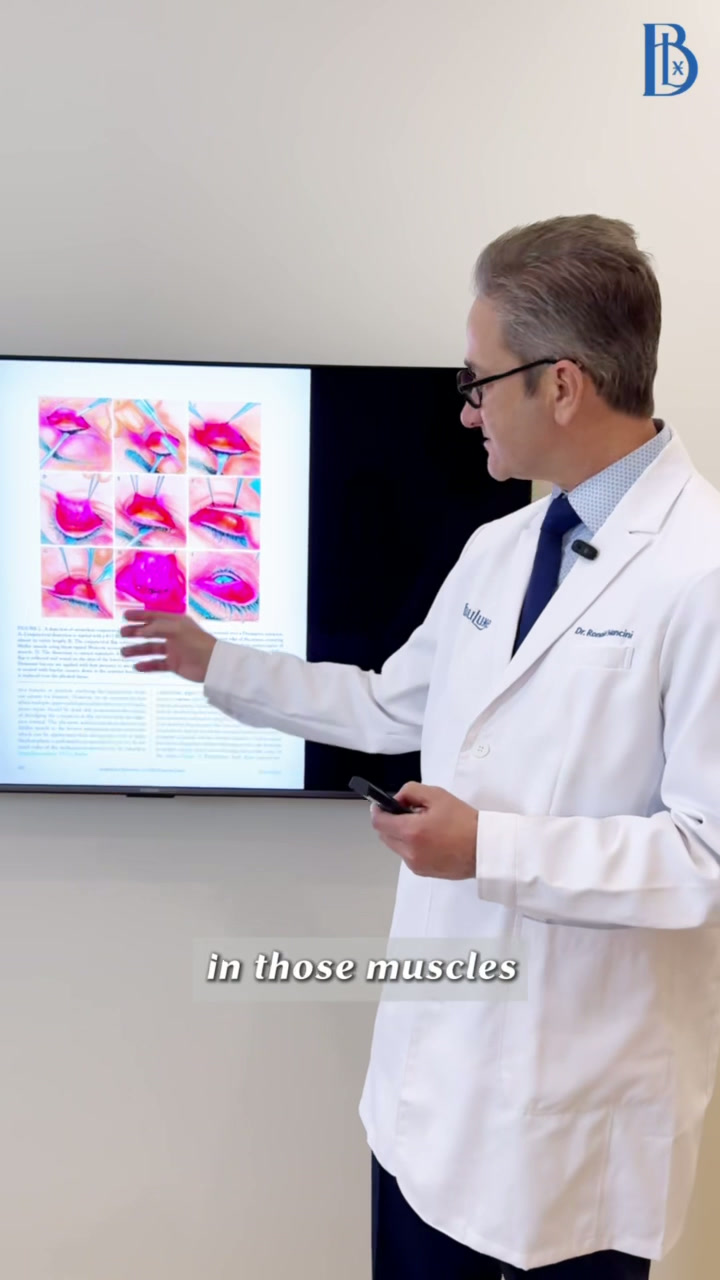
How the technique is considered: A posterior approach reaches the eyelid lifting mechanism from behind the lid. A conjunctiva-sparing variation is considered for selected anatomy and aims to limit disruption of the inner eyelid lining.
Posterior ptosis repair
A posterior operation can be useful when the patient's eyelid function and anatomy support it. The goal is to restore position without losing sight of ocular comfort and contour.
The technique is discussed as one option rather than a universal solution.
Planning for symmetry
Patients should understand that eyelid position can continue to change during recovery and that perfect symmetry cannot be promised.
Potential benefits and limitations
- Focuses treatment on eyelid position
- May avoid an external eyelid skin incision in selected patients
- Supports individualized planning
Limitations: The approach is not suitable for every ptosis pattern. Eyelid height, contour, and symmetry depend on the underlying anatomy and healing.
Recovery: Recovery includes swelling, temporary asymmetry, ocular lubrication, and scheduled follow-up.
Consultation: Evaluation includes eyelid measurements, levator function, visual symptoms, dry eye, and the relationship between ptosis and excess skin.
Questions patients ask
Frequently asked questions
Is conjunctiva-sparing ptosis surgery scarless?
The approach may avoid an external skin incision, but every operation has healing considerations and may produce temporary or internal changes that should be discussed during consultation.