Clinical expansion
An overview of a brow-lift technique intended to support selected brow rejuvenation plans.
Brow descent can add weight to the upper eyelid and change the balance of the forehead, brow, and eyelid crease.
Who may read this information: Patients with brow descent who need an assessment of brow position, eyelid skin, forehead movement, and facial proportions.
How the technique is considered: The Tuck and Rise concept combines controlled tissue handling with a planned elevation of the brow. The exact incision and fixation strategy depends on the patient's anatomy and hairline.
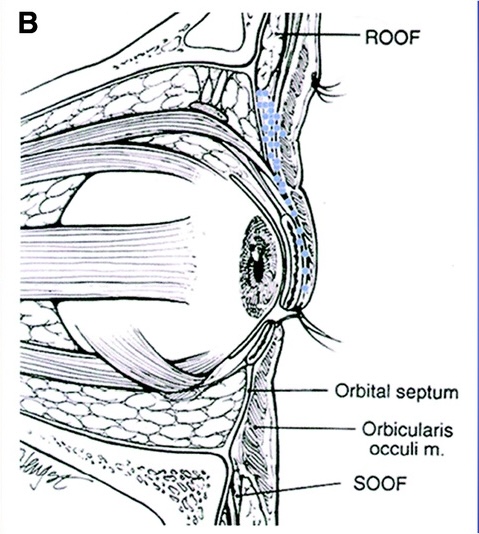
The brow and upper eyelid work together
A patient may feel upper eyelid heaviness even when brow position is a major contributor. Treating the wrong structure can lead to an unbalanced result.
Planning begins with the whole upper face rather than an isolated incision.
A measured elevation
The technique is considered only after discussing position, movement, hairline, scar, recovery, and whether eyelid surgery is also indicated.
Potential benefits and limitations
- Addresses brow position as part of upper-face planning
- Can be coordinated with eyelid surgery when appropriate
- Aims to preserve natural facial expression
Limitations: Brow-lift results vary with tissue quality, movement, healing, and aging. Elevation cannot be perfectly symmetric or permanent.
Recovery: Forehead tightness, swelling, bruising, and temporary altered sensation are possible. Activity and scar care instructions depend on the technique.
Consultation: The examination distinguishes brow descent from upper eyelid skin excess and ptosis and reviews expectations about movement and position.
Questions patients ask
Frequently asked questions
Does a brow lift replace upper blepharoplasty?
Not always. Brow descent and excess eyelid skin are different problems and may be treated separately or together after examination.