Clinical expansion
An overview of orbital floor and rim reconstruction after selected orbital trauma.
Orbital floor and rim fractures can change eye position, orbital volume, facial contour, and the relationship between the eye and cheek.
Who may read this information: Patients with orbital trauma who have persistent functional or structural concerns after examination and imaging.
How the technique is considered: A titanium orbital implant can be combined with acellular dermis to reconstruct selected defects. The approach depends on the fracture pattern, timing, eye movement, globe position, and surrounding tissues.
Reconstructing the orbit
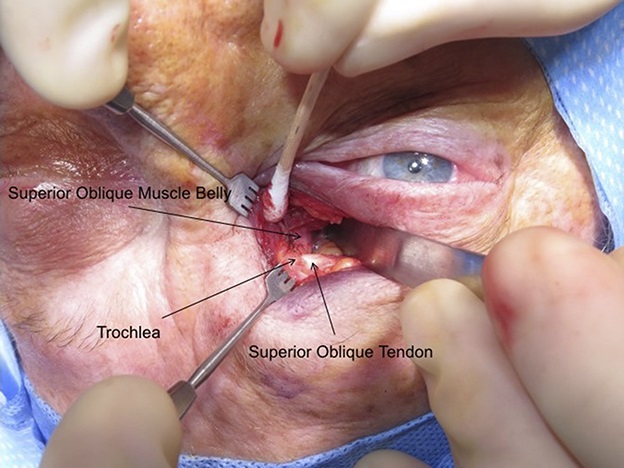
The orbit is a three-dimensional space. Reconstruction considers the floor, rim, volume, eye position, and the soft tissues around the eye.
Imaging and examination help distinguish a defect that needs repair from symptoms that may improve with observation.
Materials and planning
Titanium and acellular dermis may be used together in selected reconstructions. The choice is individualized and explained alongside risks, alternatives, and expected recovery.
Potential benefits and limitations
- Restores support in selected orbital defects
- Plans reconstruction around orbital volume and eye position
- Combines structural material with attention to soft tissue healing
Limitations: Orbital trauma is variable. Diplopia, numbness, contour change, or other symptoms may persist despite reconstruction.
Recovery: Swelling, bruising, numbness, and temporary double vision can occur after orbital surgery. Follow-up and imaging may be used to monitor healing and eye position.
Consultation: Evaluation includes injury history, eye movement, vision, facial sensation, globe position, and review of CT imaging.
Supporting publication
Scofield-Kaplan SM, Patel SY, Mancini R. Orbital Floor and Rim Reconstruction With a Titanium Orbital Implant and Acellular Dermis. Ophthalmic Plast Reconstr Surg. 2019;35(1):e19-e21.
Questions patients ask
Frequently asked questions
When is orbital fracture surgery considered?
Surgery may be considered when examination and imaging show a structural problem associated with symptoms or a meaningful change in orbital anatomy.